Hon. Adongo has identified the difficulty of finding honest and dedicated workers as a major challenge facing Ghanaian entrepreneurs, arguing that concerns about employee integrity discourage investment and limit job creation.
He said some business owners would rather invest in treasury bills or bank deposits than commit funds to new ventures because of the difficulties associated with managing employees.
Speaking during an engagement in Hohoe, he explained that the lack of trustworthy workers makes it difficult for entrepreneurs to delegate responsibilities, particularly when operating businesses in different locations.
“The biggest challenge in Ghana is lack of getting honest and dedicated workers. That is the biggest challenge,” he said.
He cited the example of an entrepreneur based in Accra who may be reluctant to establish a business in Hohoe without a reliable person to oversee its daily operations.
Hon. Adongo also expressed concern that some employees prioritise immediate personal gains over their employers’ long-term interests. He cited reports of workers allegedly taking amounts ranging from GH¢20,000 to GH¢30,000 from employers and absconding, arguing that such incidents undermine trust and discourage investment.
According to him, some entrepreneurs consequently prefer investing in rental properties, which they consider easier to manage, rather than establishing operational ventures such as iron rod shops, cold stores and radio stations.

He called for a change in workplace attitudes, urging employees to demonstrate honesty, commitment and responsibility towards their employers. He said a more trustworthy workforce would give entrepreneurs greater confidence to invest, expand their operations and create employment.
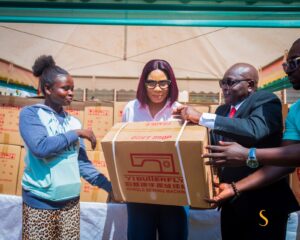
The remarks came as he continued an initiative to promote youth entrepreneurship through the distribution of sewing machines.

In Hohoe, 1,000 sewing machines were presented to 1,000 young men and women, including vulnerable individuals, to help them start or strengthen tailoring and dressmaking businesses.
The initiative targets the distribution of 10,000 sewing machines across Ghana’s 16 regions to equip young people with the tools to develop their skills, become self-employed and earn sustainable livelihoods.
Hon. Adongo encouraged the beneficiaries to put the machines to productive use and build viable enterprises.
Source: www.thenewindependentonline.com