Report By: Ishmael Barfi
Accra, Ghana — Ghana Water Limited says illegal water connections, meter bypasses, and aging infrastructure are significantly undermining water supply reliability in parts of Accra and Tema, prompting an intensified nationwide enforcement and infrastructure rehabilitation exercise.
The state water utility has so far recovered approximately GH¢3.7 million from customers engaged in water theft as part of an ongoing revenue mobilisation and anti-illegal connection operation being conducted with support from National Security.
Managing Director of GWL, Adam Mutawakilu, disclosed that nearly 400 illegal connections had already been uncovered in Accra alone, exposing substantial financial and operational losses to the company.
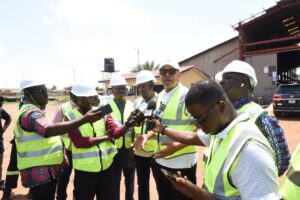
Speaking during an inspection tour of the company’s Central Workshop and sections of the Kpong transmission line undergoing repairs, Mr. Mutawakilu said investigations revealed that illegal water use and pipeline leakages remain major contributors to high levels of non-revenue water.
To tackle the situation, GWL established a specialised Revenue Enhancement Team in August 2025. Initially operating with three units, the initiative has since expanded to 10 operational teams nationwide to strengthen monitoring and enforcement activities. “As of last Friday, we had identified about 397 illegal connections,” he stated.
According to him, the infractions include unauthorised service connections, meter bypasses, and unmetered water offtakes along key transmission corridors. The company estimates that the exercise has uncovered liabilities amounting to about GH¢16 million, with GH¢3.7 million already recovered.
Mr. Mutawakilu warned that customers who fail to settle outstanding obligations risk prosecution and disconnection from the national water supply network. Beyond the financial impact, GWL says the illegal activities are worsening water shortages in urban communities by diverting large volumes of treated water before it reaches consumers.
The challenge is compounded by deteriorating transmission infrastructure linked to the Kpong Water Treatment Plant. According to GWL assessments, nearly 40 per cent of water produced from the facility is lost through leakages before reaching Tema and surrounding communities. The company identified aging 21-inch steel transmission pipelines—some over 70 years old—as a major source of the losses. Years of operational pressure and delayed maintenance have left sections of the pipelines weakened and prone to bursts and perforations.
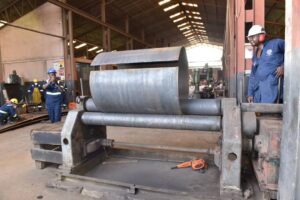
In response, GWL has commenced fabrication and replacement works on damaged sections of 21-inch and 42-inch pipelines at its Central Workshop. The facility is producing specialised pipe fittings and replacement pipes to restore the integrity of the transmission system. The utility has already invested about GH¢5 million into the repair and fabrication programme, with additional funding expected to accelerate ongoing works.
Mr. Mutawakilu noted that the pipeline rehabilitation exercise is taking place alongside the replacement of all five pumps at the Kpong Water Treatment Plant to improve production capacity and water pressure within the network. He stressed that reinforcing the transmission system is critical to preventing future leakages once the upgraded pumps become operational. “We are not going to wait for things to deteriorate before action is taken,” he said.
The interventions form part of broader efforts by GWL to reduce non-revenue water, improve operational efficiency, and ensure more reliable potable water supply to urban communities.
Source: www.thenewindependentonline.com