Report By: Ishmael barfi
The Ghana Anti-Corruption Coalition says journalists must distinguish between audit findings, control weaknesses and proven corruption as they report on the Auditor-General’s performance audit of the National Petroleum Authority.
The Ghana Anti-Corruption Coalition (GACC) has urged journalists to exercise caution in reporting the Auditor-General’s performance audit of the National Petroleum Authority (NPA), warning against sensational headlines and conclusions that go beyond the evidence.
The coalition said the audit should serve as a basis for evidence-led reporting and further investigations rather than be presented as proof of corruption where no such finding had been established.
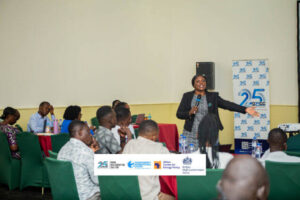
The call was made at a media training organised by GACC in collaboration with the Ghana Audit Service and civil society organisations to strengthen journalists’ understanding of the audit findings and their implications for public accountability.
Samuel Harrison Kujo, a Programmes Officer at GACC, said the training was prompted by public and media interest in the NPA audit and concerns that technical findings could be misrepresented through sensational or partisan reporting.
“We want to see stories that relate to the facts as stated in the audit report, and not maybe personal opinions or some kind of partisan positions that may draw attention away from the actual findings in the report,” he said.
He described the media as an important partner in ensuring that citizens receive accurate information about the performance of public institutions.
Audit findings offer leads for further investigations
Kodzo Yaotse, Policy Lead for Petroleum and Conventional Energy at the Africa Centre for Energy Policy (ACEP), identified several issues in the audit that could provide leads for further journalistic investigations.
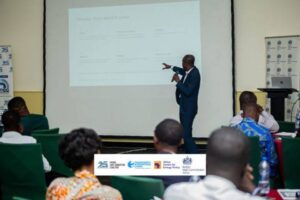
These included petroleum-sector margins, contracts, fuel-quality monitoring, payments for services and the accountability mechanisms governing the downstream petroleum industry.
One issue concerned Automatic Tank Gauging (ATG) systems installed at selected petroleum stations to support monitoring activities.
According to Yaotse’s presentation, 23 systems had been installed at selected locations, but 11 were found to be non-functional at the time of the audit.
He also highlighted a reported payment of approximately GH¢648.62 million to Rock Africa Solutions under a contract covering the installation, operation and maintenance of the systems.
Yaotse said the available information did not provide a sufficient breakdown to clearly establish how much of the total payment related to installation, operation and maintenance.
He urged journalists to examine the relevant contracts, payment records, maintenance obligations and evidence of work performed to establish what the documents show.
However, he cautioned against interpreting the findings as proof that a contractor had been paid for work it did not perform.
“You can’t say the contractor was paid for work but never did it. The monitor says payment was not verified, which is a different claim,” he said.
Yaotse stressed that the audit had not established that a corrupt act had occurred.

“What this audit does, and I think I have to stress like the earlier speakers stressed, is that there is as yet no finding that a corrupt action was taken,” he said.
He encouraged journalists to investigate issues raised by the report, including maintenance payments, procurement procedures, contract implementation and the beneficial ownership of companies involved in public contracts, while ensuring their conclusions were supported by evidence.
Petroleum margins and product monitoring under scrutiny
Yaotse also drew attention to petroleum product marking and quality assurance, raising questions about the effectiveness of systems intended to monitor and track petroleum products.
He said journalists could examine whether products covered by the relevant monitoring arrangements were being adequately tracked and whether the systems were achieving their intended purpose.
Another issue concerned the Unified Petroleum Pricing Fund (UPPF), a component of the downstream petroleum pricing structure.
According to Yaotse, the UPPF component increased substantially between 2018 and 2024, raising questions about the economic justification for the increases and the utilisation of the funds.
He said these issues required further examination of the relevant data, policies and expenditure records rather than conclusions based solely on the reported increases.
Audit Service urges journalists to study full report
Samuel Frimpong-Manso, Deputy Director-General in charge of Performance and Special Audit at the Ghana Audit Service, said the performance audit assessed whether the NPA was effectively implementing its legal mandate and regulatory policies.
The NPA regulates Ghana’s downstream petroleum sector, including licensing, monitoring and enforcement.
Frimpong-Manso urged journalists to study the complete audit report before publishing stories based on its findings.
“The media play a crucial role in promoting transparency and accountability and therefore I encourage you to study the report thoroughly after this session to ensure accurate and informed reporting,” he said.
Source: www.thenewindependentonline.com