Report By: Ishmael Barfi
Accra, Ghana — Youth entrepreneurship in Ghana is expected to receive a significant boost following the rollout of the €2.7 million SPARK Project, a multi-partner initiative aimed at strengthening young businesses, expanding skills development, and creating sustainable employment opportunities across the country.
The project is being implemented by SOS Children’s Villages Ghana, Social Innovation Africa and Sontaba, with funding support from the European Union. It aims to equip youth-led organisations and emerging entrepreneurs with practical skills, financial resources, and technical support to scale their ventures and improve livelihoods.
Speaking on the initiative, Edwin Zu-Cudjoe, Executive Director of Social Enterprise Ghana, said the SPARK Project aligns with the organisation’s mission of promoting social entrepreneurship and empowering young changemakers across the country.
He explained that Social Enterprise Ghana serves as the national network for social enterprises and social entrepreneurs, working with more than 60 incubation and acceleration centres nationwide that provide business development support to young people.
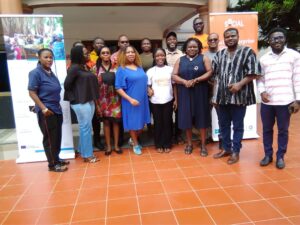
He also noted the organisation’s longstanding collaboration with government institutions, including the Ministry of Trade, Agribusiness and Industry, in advancing the Ghana Social Enterprise Policy aimed at creating a more enabling environment for the sector.
Mr. Zu-Cudjoe said the SPARK Project is particularly significant because of its focus on training, mentorship and enterprise development, which will help young people transition from job seekers to job creators.
According to him, the project’s support package—comprising capacity-building, startup capital and grant opportunities—will enable beneficiaries to build innovative enterprises capable of generating employment and addressing pressing community challenges.
He added that young entrepreneurs supported under the initiative are expected to operate across sectors such as climate-smart agriculture, education, green and circular economy enterprises, healthcare, digital innovation, information technology and the creative arts industry.
“We want to see young people creating solutions, building businesses, creating jobs and transforming their communities,” he said. “That is the kind of impact this project seeks to achieve.”

Providing further details on implementation, SPARK Project Coordinator Sam Rex Sagoe Babo said the initiative adopts a needs-driven approach designed to ensure that support is tailored to the specific realities of participating organisations and entrepreneurs.
He explained that all applicants will undergo baseline surveys and organisational capacity assessments before training begins, allowing programme designers to develop customised interventions rather than generic training modules.
“We want to ensure that the support we provide responds directly to what these organisations and enterprises need,” he said. “The assessments help us understand their realities and develop customised solutions that strengthen their work.”
Mr. Babo also highlighted a two-stage accountability system involving independent selection committees and compliance officers who will conduct field verification exercises to ensure transparency and credibility in beneficiary selection.
He further disclosed that Regional Coordinating Councils have been engaged as strategic partners to support implementation and ensure long-term monitoring of beneficiaries even after the project concludes.
“We believe sustainability is critical,” he said. “By working with Regional Coordinating Councils, we are creating structures that will continue supporting and monitoring beneficiaries long after the project ends.”
The SPARK Project, co-funded by SOS Children’s Villages, is expected to strengthen youth-led social enterprises and CSOs, promote innovation, and contribute significantly to job creation and inclusive economic growth across Ghana.
Source: www.thenewindependentonline.com