

Kumasi, Ghana — The International Labour Organization (ILO) has urged journalists reporting on child labour, business and human rights to prioritise accuracy, ethical journalism and the protection of children, warning that irresponsible reporting can expose vulnerable children to further harm.
Anders Johnson, Regional Communication Officer for Africa at the ILO, made the call in an interview with The New Independent Online on the sidelines of a three-day training workshop on Child Labour, Business and Human Rights for journalists.
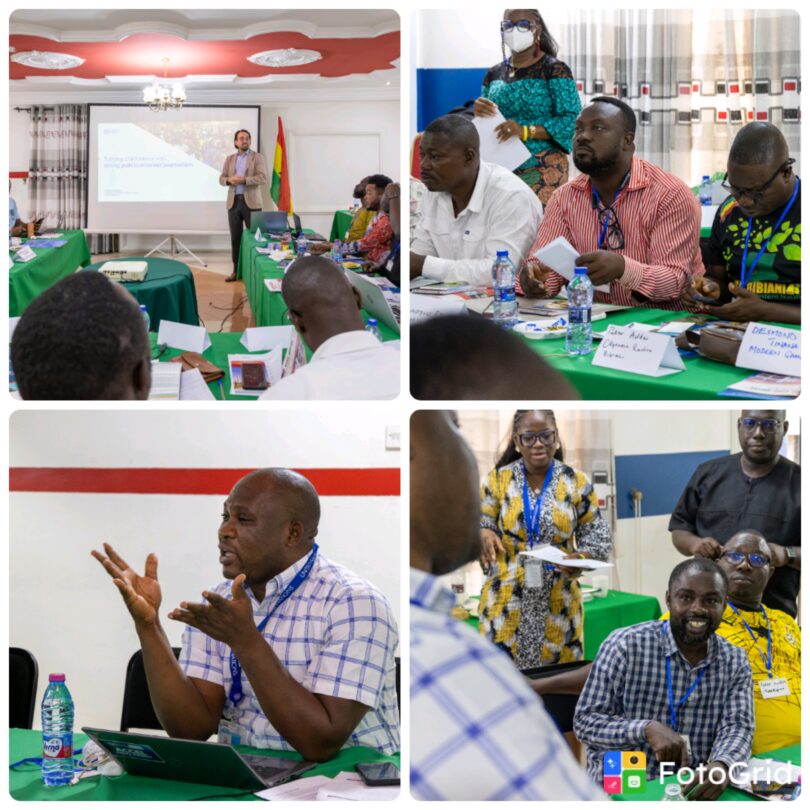
The workshop, organised by the ILO’s ACCEL Africa Project, was held from July 14 to 16, 2026, at the True Vine Hotel in Ahodwo, Kumasi, and brought together selected journalists reporting from child labour-prone areas across Ghana.
Participants were drawn from Accra and Kumasi, as well as the Central Region and Wassa Amenfi East, Bibiani, Wiawso and Juaboso, and Bia East and West.

The training formed part of efforts to strengthen journalists’ capacity to report on child labour, business practices and human rights, particularly within vulnerable communities and supply chains.
The ACCEL Africa Project seeks to accelerate the elimination of child labour in cocoa and artisanal gold mining supply chains across Africa.
Mr Johnson said journalists play a critical role in shaping public discourse, particularly in Africa, and must ensure that reporting on child labour is based on verified facts rather than isolated cases or hearsay.
He said accurate reporting was essential to ensuring that the right stakeholders—including governments, businesses, communities and families—could be held accountable and provided with the appropriate support.
“Journalists play an incredibly important role in shaping public discourse, particularly in a lot of countries here in Africa, and so it’s important that the kind of discussions that they’re having are based on facts,” he said.
Mr Johnson noted that child labour is a complex issue connected to several factors, including climate change, agriculture, mining, gender and cultural practices, requiring journalists to go beyond individual cases and examine the wider circumstances that contribute to the problem.
He cautioned journalists against relying on a single case to make broad conclusions about the prevalence or nature of child labour.
“One of the problems that we’ve seen in the past in the region is that the approach to journalism can sometimes be very much close to hearsay. So they will find one story of a child somewhere, and they kind of extrapolate that,” he said.

According to him, journalists must understand the interconnected factors driving child labour to ensure that their reporting accurately reflects the realities faced by affected communities.
“Only when the facts are correct can we then actually not only have a sort of fact-based conversation, but can we actually hold the right people accountable, whether it’s government, whether it’s businesses, whether it’s communities or families themselves, and give them the right kind of support that they need,” he said.
Protecting Children Beyond the Story
Mr Johnson also stressed the importance of ethical considerations when reporting on children, particularly those in vulnerable situations.

He said journalists must ensure that their pursuit of compelling stories does not put children’s safety, dignity, future or well-being at risk.
“I would argue that no story is so important that it is worth putting at risk the life, the morals, the future of a child,” he said.
He urged journalists to pay particular attention to consent when interviewing or photographing children, explaining that obtaining permission from parents or guardians should not be viewed as the only requirement.
According to him, journalists should also seek informed consent, ensuring that children themselves understand what they are participating in and the potential consequences of their stories or images being published.

“It’s about making sure that you get consent, not just consent from the parents for the child, for example, to be photographed or interviewed, but also that there is what we call informed consent—that the child itself also has some sense of what exactly it is that they’re getting into,” he said.
He further urged journalists to consider the long-term implications of publishing images and stories involving children, particularly through digital and social media platforms.
Mr Johnson noted that once information is published online, it can remain accessible for many years, potentially affecting the child long after the original story has disappeared from the news cycle.
He challenged journalists to consider whether they would still be comfortable with a photograph of a child in a vulnerable situation remaining publicly available five or ten years later.
“If you want to use a photograph, perhaps of a child in a very vulnerable situation, do you still think it’s okay for that photograph to still be out there five to 10 years from now?” he asked.
He clarified that such considerations should not necessarily prevent journalists from reporting on sensitive issues or using powerful images, but should encourage them to assess the potential risks carefully before publication.
“It doesn’t mean that you stop using those photographs or those stories, but it does mean that you have to be much more aware of the risks that are involved before you can do so,” he said.
Responsible Journalism in the Digital and AI Era
Mr Johnson also highlighted the changing media landscape and the growing responsibility of journalists to ensure that accurate information is available across different platforms.

He said journalism now extends beyond traditional print, radio and television, with digital platforms and social media becoming increasingly important sources of information for audiences.
He added that the growing use of artificial intelligence makes the availability of accurate information even more important, as AI systems often draw from information that is publicly available online.
“We want to make sure that all of the information that’s out there is actually correct,” he said.
The training underscored the need for journalists covering child labour to combine rigorous fact-checking with ethical reporting, ensuring that efforts to expose abuses do not inadvertently cause further harm to the very children they seek to protect.
Source: www.thenewindependentonline.com